
BYB: platformă white-label, multi-tenant, pentru aplicații de startup și evaluare asistată de AI
Un produs SaaS co-deținut 49% de Milannial, construit end-to-end și acum în pilot cu primii utilizatori: de la intake la analiză AI, potrivire jurați, scoring, feedback structurat și sesiuni 1:1 - ~12 aplicații în prima ediție, 6 criterii ponderate egal, 3 provideri AI comutabili la runtime, izolare pe tenant și GDPR proiectate de la început.
Rezultate
- Pipeline complet în 6 etape, live în pilot: intake → analiză AI → potrivire jurați → scoring → feedback structurat → sesiuni 1:1
- ~12 aplicații în prima ediție, evaluate pe 6 criterii ponderate egal
- Strat AI multi-provider (OpenRouter / OpenAI / Anthropic) comutabil la runtime, cu plafon de cost per rulare
- Izolare pe tenant în dublu strat: scoping pe org injectat în repository + RLS Postgres, cu teste cross-tenant în CI
- GDPR by design: ștergere în cascadă, deck-uri private cu URL-uri semnate, audit log complet; hosting UE (Frankfurt)
Stack tehnic
aplicații în prima ediție
criterii de evaluare per ediție
provideri AI, comutabili
straturi izolare tenant (repo + RLS)
BYB nu este un proiect pentru client — este un produs co-deținut de Milannial Software (49%) și construit end-to-end: arhitectură, backend, pipeline AI, portaluri admin și jurați, infrastructură. Este cea mai clară demonstrație posibilă a ceea ce înseamnă „end-to-end” aici, pentru că nu a existat nimeni altcineva căruia să predai ceva.
Produsul: organizațiile care primesc aplicații de startup — acceleratoare, competiții, programe de investiții — își rulează întregul pipeline de evaluare prin BYB. Intake, deduplicare, pre-analiză AI, atribuire jurați, scoring pe criterii, feedback structurat către candidați și rezervare sesiuni 1:1. White-label, multi-tenant, un singur codebase.
Este în prezent în pilot cu primii utilizatori.
01 · Platformă
White-label, multi-tenant
Un singur codebase deservește fiecare organizație; izolarea pe tenant este impusă în dublu strat — scoping pe org injectat în repository plus RLS Postgres, verificat de teste cross-tenant în CI.
02 · AI
Asincron, multi-provider, cu plafon de cost
Analiza nu blochează niciodată trimiterea: joburile se pun în coadă pe Postgres și rulează într-un worker, cu OpenRouter / OpenAI / Anthropic comutabile la runtime și plafon de cost per rulare.
03 · Jurizare
Scoring cu om în buclă
Jurații notează pe baza unui set de criterii versionat, cu excluderi pentru conflict de interese impuse de sistem — AI propune, oamenii decid.
04 · Încredere
GDPR by design
Ștergere în cascadă, deck-uri private cu URL-uri semnate, audit log complet și listă publică de sub-procesatori — transparența ca funcționalitate.
Oricine a organizat o competiție de startup cunoaște faza cu spreadsheet-uri: sute de aplicații, o duzină de jurați voluntari, criterii care înseamnă altceva pentru fiecare, conflicte de interese pe care nimeni nu le-a urmărit și candidați care nu aud niciodată altceva decât „mulțumim pentru aplicație”.
Fiecare dintre acestea este o problemă de inginerie rezolvabilă. Împreună, formează un produs:
- Intake la scară — un formular public de aplicație cu salvare automată a draftului, anti-spam și consimțământ GDPR, care nu cedează în noaptea dinaintea deadline-ului.
- Evaluare corectă — jurații notează pe baza unui set de criterii versionat, nu după impresie; excluderile pentru conflict de interese sunt impuse de sistemul de atribuire, nu de memorie.
- Feedback ca output de primă clasă — candidații primesc un pachet de feedback publicat pe o pagină tokenizată și pot solicita o sesiune 1:1, în loc de tăcere.
Pasul 1 · 01 / 06
Intake
Un formular public de aplicație, personalizabil pe brand, cu salvare automată a draftului, protecție anti-spam și consimțământ GDPR explicit. Startup-urile sunt deduplicate la sosire, astfel încât aceeași companie care aplică de două ori să nu devină două înregistrări de notat.
Pasul 2 · 02 / 06
Analiză AI asincronă
Trimiterea nu așteaptă niciodată AI-ul. Joburile de analiză sunt puse în coadă și procesate de un worker separat, cu plafon de cost per rulare. Promptul și schema outputului sunt generate din setul de criterii versionat al ediției — criteriile sunt date, nu cod.
Pasul 3 · 03 / 06
Potrivire jurați
Administratorii atribuie jurați, cu excluderi pentru conflict de interese impuse de sistem. Un jurat care a investit într-un candidat pur și simplu nu poate fi atribuit acelui candidat.
Pasul 4 · 04 / 06
Scoring
Jurații evaluează într-un portal dedicat: evaluări notate pe criterii, note private și comentarii împărtășite cu ceilalți jurați. Scorurile AI stau alături ca referință — AI propune, oamenii decid.
Pasul 5 · 05 / 06
Feedback structurat
Selectați sau nu, candidații primesc un pachet de feedback publicat pe o pagină tokenizată — fără login, nimic scurs în afara propriei aplicații.
Pasul 6 · 06 / 06
Sesiuni 1:1
Din pagina de feedback, candidații pot solicita sesiuni individuale cu mentorii sau jurații programului, închizând bucla de la aplicație la conversație.
Ce urmează sunt capturi de ecran reale din produsul live — pipeline-ul admin, pre-analiza AI, fișa de scoring a juraților, intake-ul public, feedback-ul pentru candidați și rezervarea 1:1. Derulează prin ele.
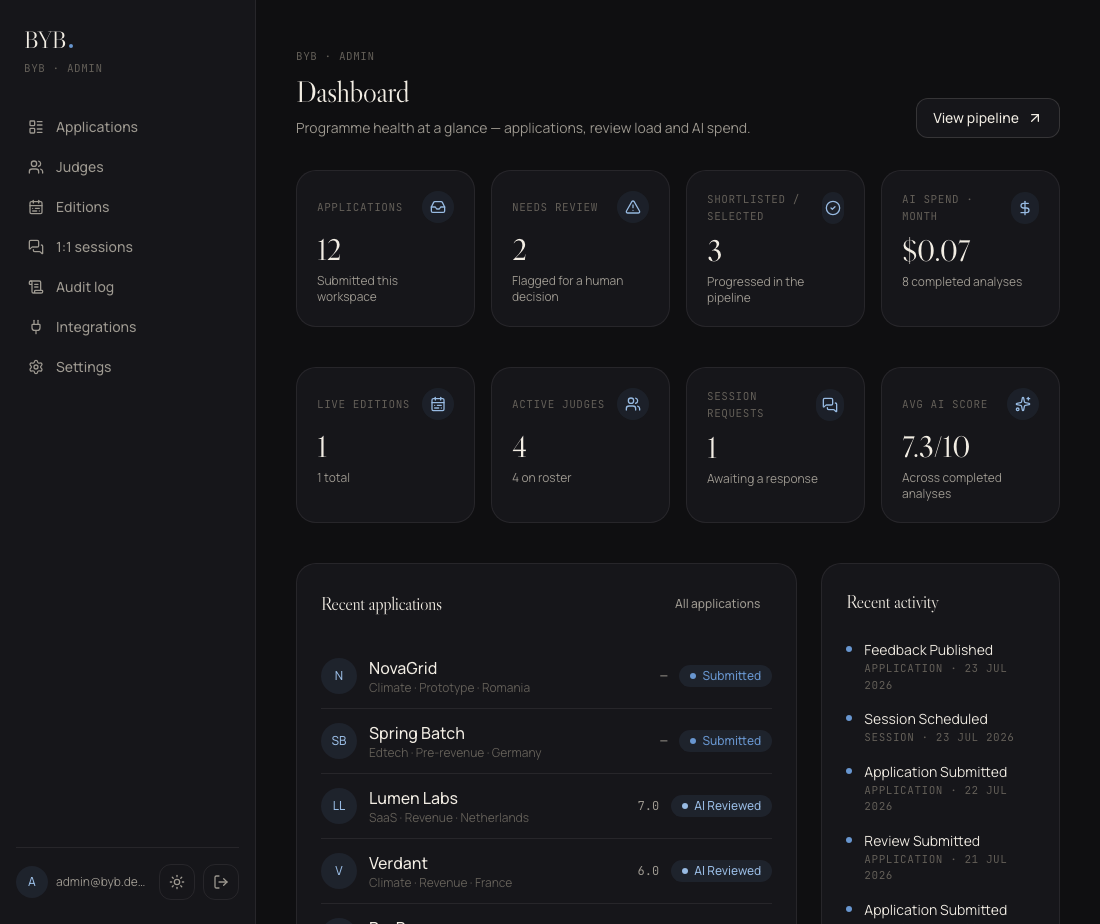
Admin · 01 / 06
Un singur pipeline, nu doisprezece foi de calcul
Fiecare aplicație ajunge într-un singur pipeline: deduplicată la intake, notată asincron de AI și urmărită de la primul draft până la decizia finală — cu audit log pe fiecare acțiune de admin.
AI · 02 / 06
Pre-analiză AI pe fiecare aplicație
AI-ul citește fiecare aplicație față de criteriile versionate ale ediției și produce scoruri structurate plus o justificare scrisă. Providerii sunt comutabili la runtime, iar fiecare rulare înregistrează modelul, tokenii și costul real față de un plafon dur.
Jurați · 03 / 06
Jurații notează criterii, nu impresii
Jurații evaluează în portalul lor cu scoring pe criterii, note private și comentarii împărtășite cu aplicantul. Excluderile de conflict de interese sunt impuse de sistem — un jurat în conflict nu poate fi asignat deloc.
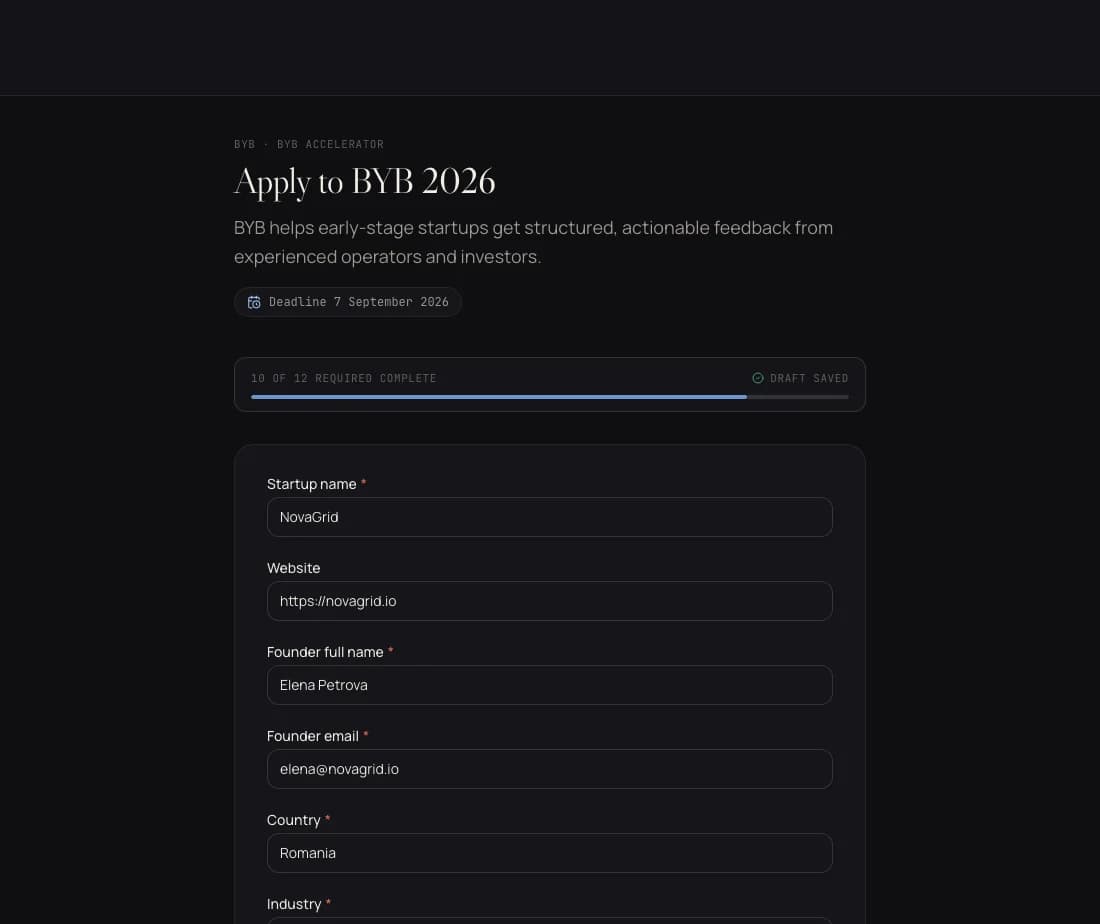
Intake · 04 / 06
Un intake public care respectă consimțământul
Formularul este generat dintr-o schemă versionată, cu autosave la draft, anti-spam și consimțământ GDPR explicit — inclusiv pentru analiza asistată de AI — capturat la submit.
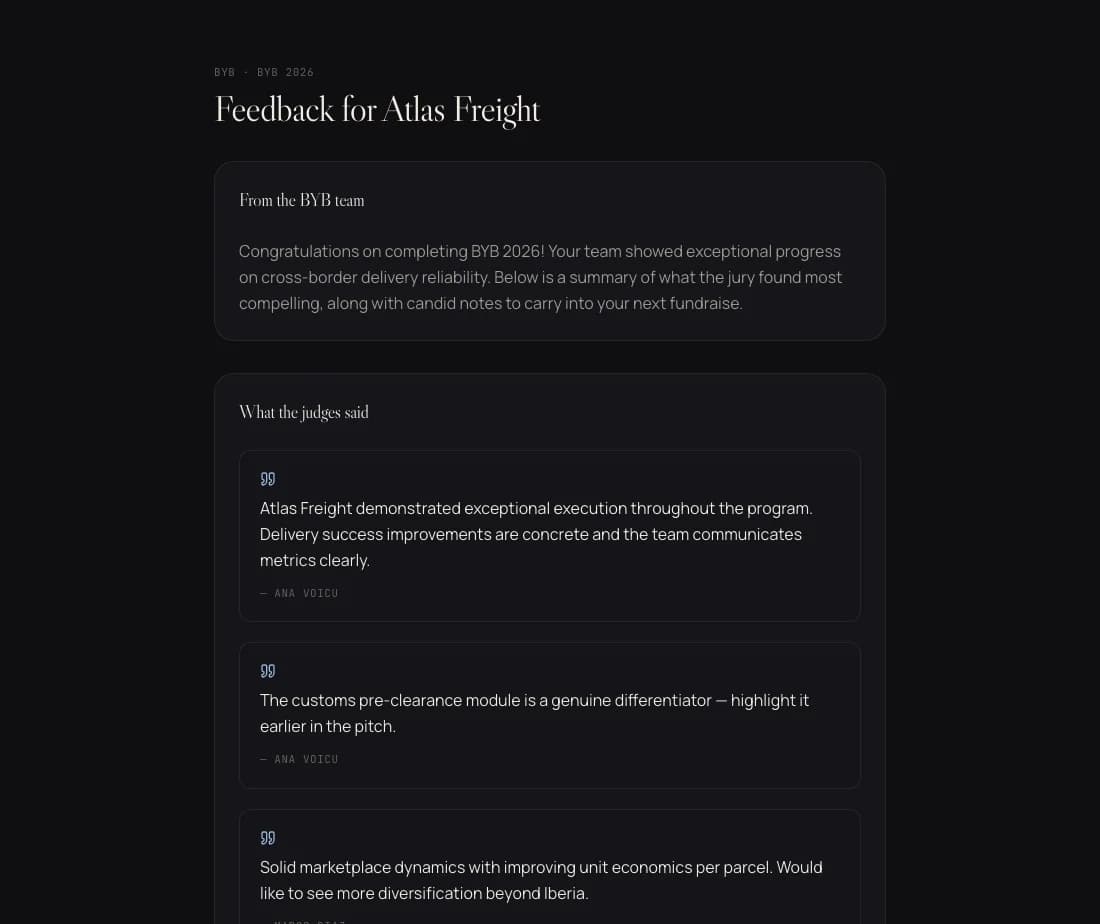
Feedback · 05 / 06
Feedback structurat, nu un email de respingere
Aplicanții primesc o pagină tokenizată — fără login — cu un mesaj de la echipă, comentariile comune ale juraților și scoruri opționale. Scorurile numerice rămân interne dacă un admin nu alege să le partajeze.
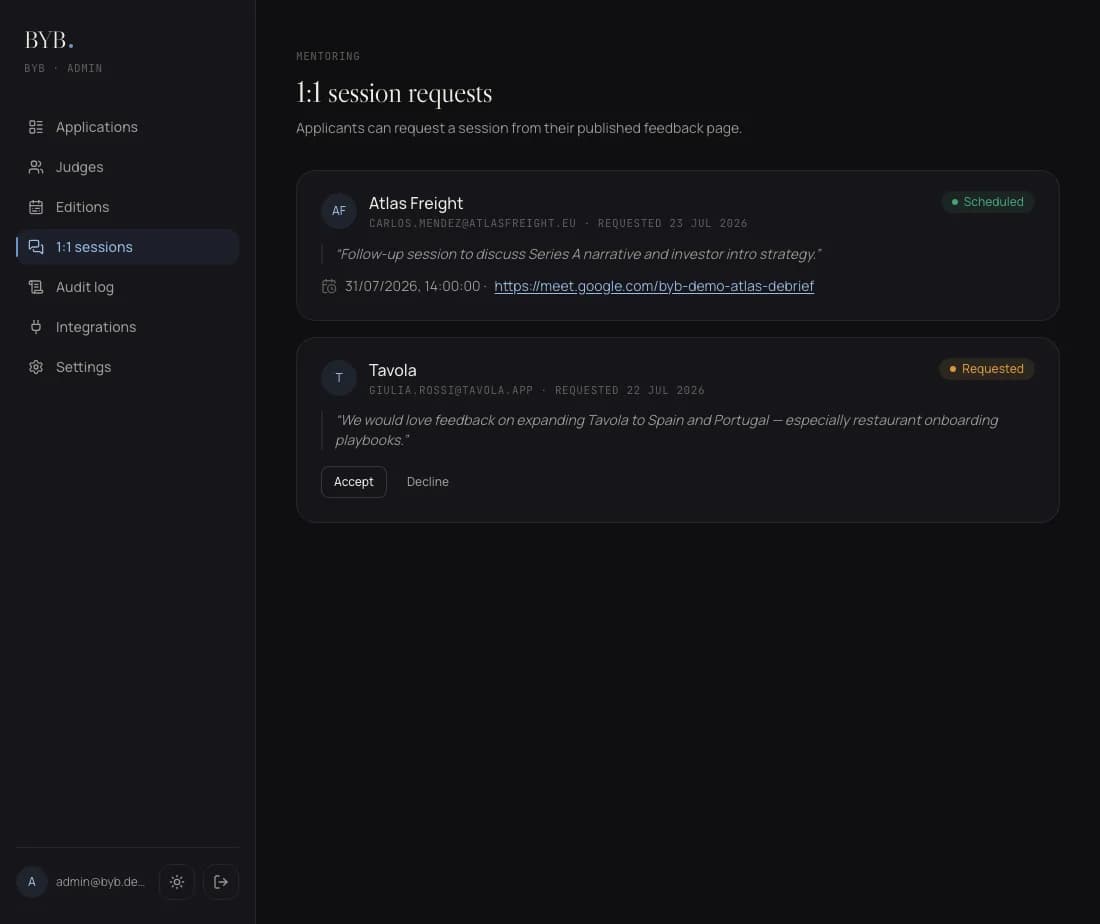
1:1 · 06 / 06
De la feedback la o conversație reală
Din aceeași pagină de feedback, aplicanții pot solicita o sesiune 1:1 cu echipa — transformând o decizie unidirecțională într-o relație continuă.
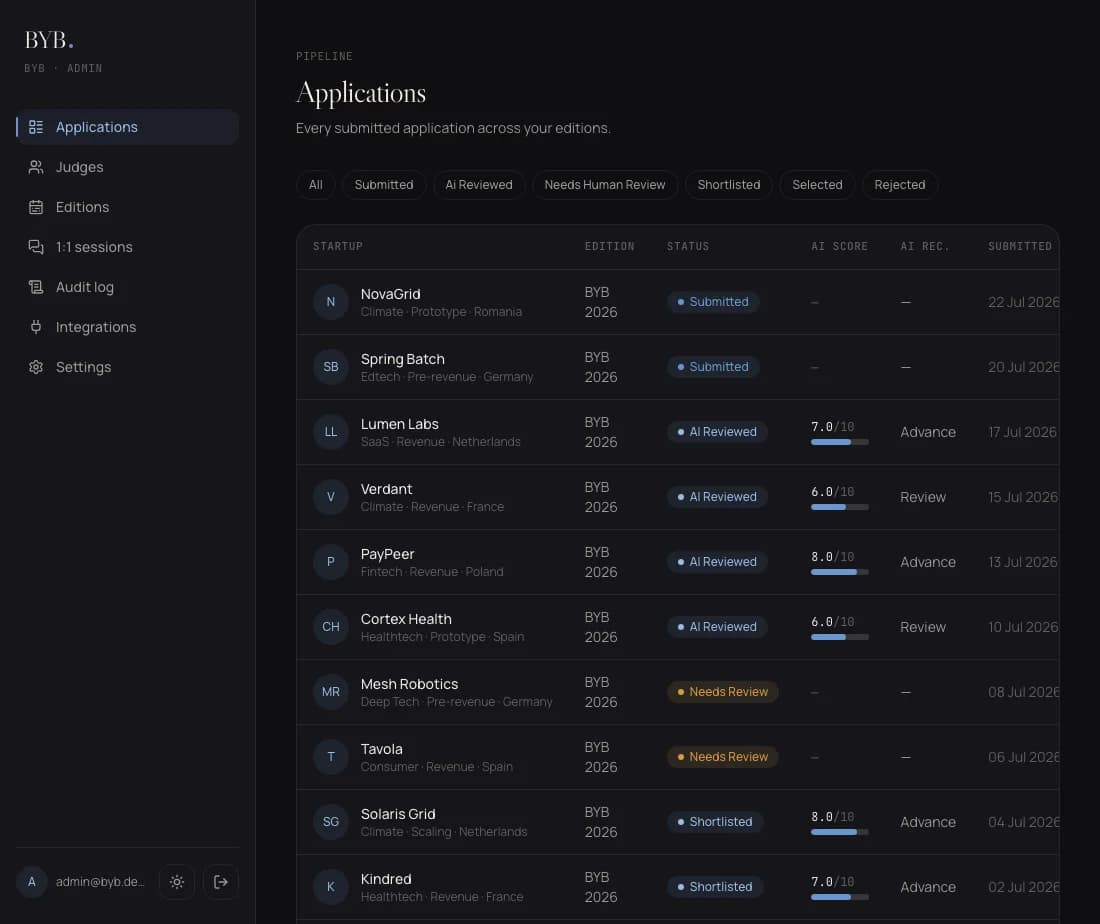
Admin · 01 / 06
Un singur pipeline, nu doisprezece foi de calcul
Fiecare aplicație ajunge într-un singur pipeline: deduplicată la intake, notată asincron de AI și urmărită de la primul draft până la decizia finală — cu audit log pe fiecare acțiune de admin.
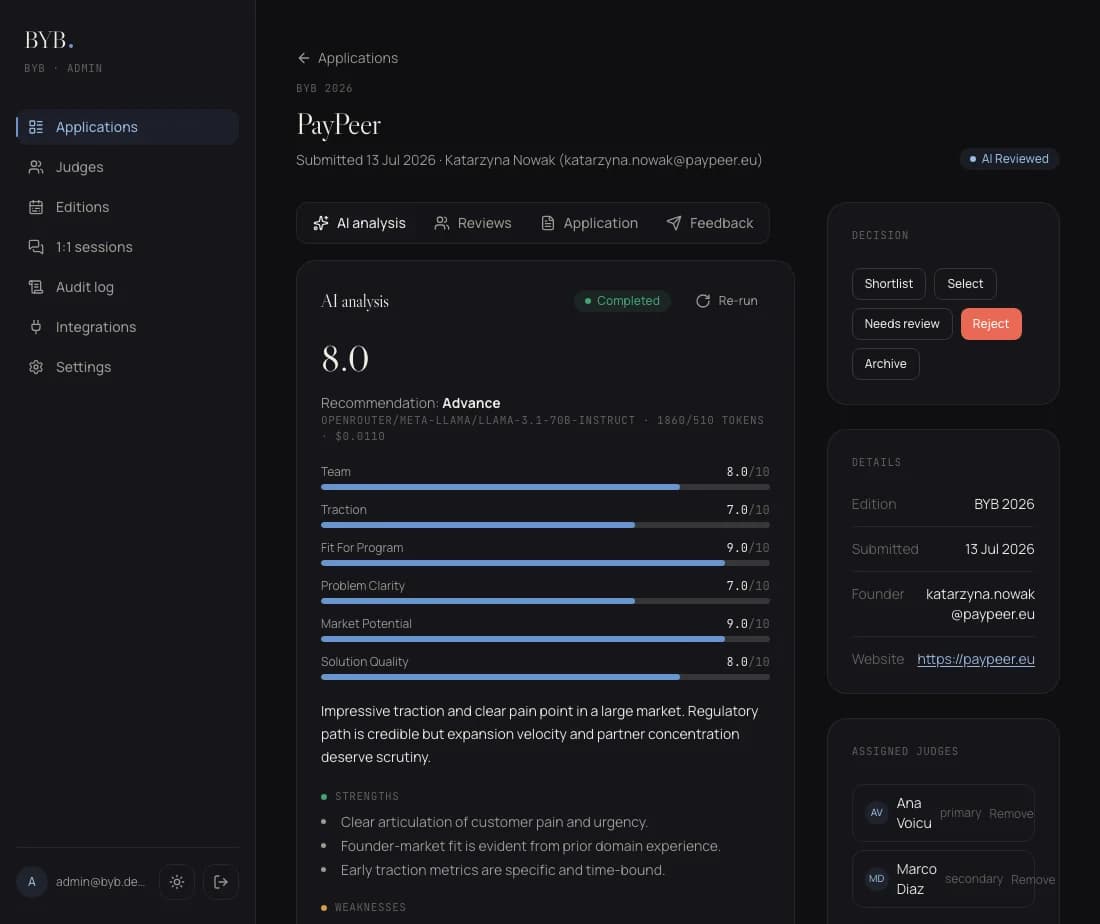
AI · 02 / 06
Pre-analiză AI pe fiecare aplicație
AI-ul citește fiecare aplicație față de criteriile versionate ale ediției și produce scoruri structurate plus o justificare scrisă. Providerii sunt comutabili la runtime, iar fiecare rulare înregistrează modelul, tokenii și costul real față de un plafon dur.
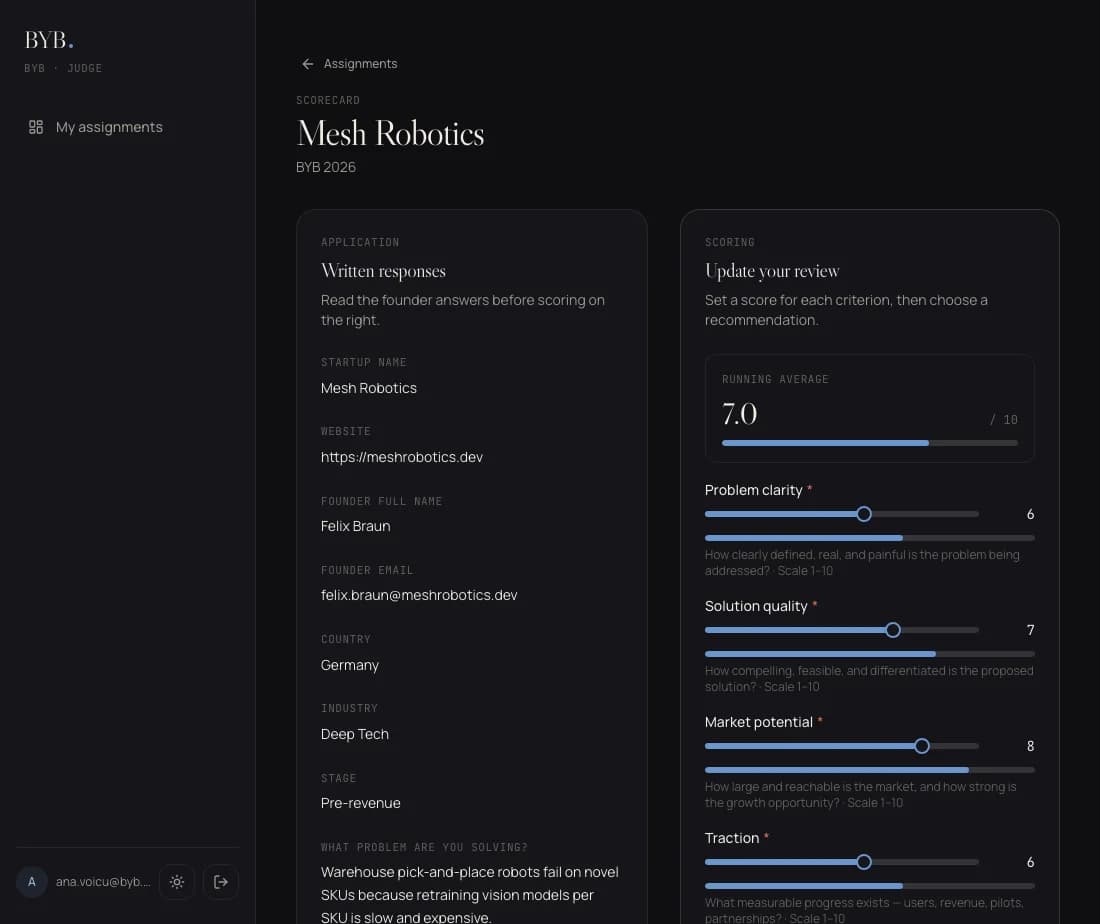
Jurați · 03 / 06
Jurații notează criterii, nu impresii
Jurații evaluează în portalul lor cu scoring pe criterii, note private și comentarii împărtășite cu aplicantul. Excluderile de conflict de interese sunt impuse de sistem — un jurat în conflict nu poate fi asignat deloc.
Intake · 04 / 06
Un intake public care respectă consimțământul
Formularul este generat dintr-o schemă versionată, cu autosave la draft, anti-spam și consimțământ GDPR explicit — inclusiv pentru analiza asistată de AI — capturat la submit.
Feedback · 05 / 06
Feedback structurat, nu un email de respingere
Aplicanții primesc o pagină tokenizată — fără login — cu un mesaj de la echipă, comentariile comune ale juraților și scoruri opționale. Scorurile numerice rămân interne dacă un admin nu alege să le partajeze.
1:1 · 06 / 06
De la feedback la o conversație reală
Din aceeași pagină de feedback, aplicanții pot solicita o sesiune 1:1 cu echipa — transformând o decizie unidirecțională într-o relație continuă.
Arhitectură de sistem · hover sau tap pe un nod
Postgres
Row-level security e plasa de siguranță sub stratul de repository: izolarea e impusă de două ori, iar testele cross-tenant din CI blochează orice deploy care regresează unul din straturi.
Datele fiecărei organizații trăiesc în același Postgres. Asta funcționează doar dacă izolarea este de neîncălcat, așa că BYB o impune la două straturi independente: fiecare interogare server-side trece printr-un repository care injectează id-ul organizației din contextul tenant — aceasta este regula — iar row-level security Postgres este plasa de siguranță dedesubt. Testele de izolare cross-tenant rulează în CI și blochează deploy-ul dacă oricare strat regresează.
Analiza AI nu rulează niciodată într-un request. Joburile sunt puse în coadă pe Postgres (pg-boss — deliberat fără Redis de operat) și procesate de un serviciu worker separat. Stratul AI este agnostic față de provider: OpenRouter, OpenAI sau Anthropic, comutabil la runtime per organizație, cu plafon de cost, astfel încât o ediție configurată greșit să nu consume un buget peste noapte.
AI-ul produce o pre-analiză structurată pe criteriile ediției — nu decide niciodată. Jurații văd evaluarea AI alături de propriul flux de scoring. Acesta este pattern-ul pe care îl recomandăm fiecărui client care livrează AI într-un proces real de decizie: modelul accelerează oamenii; nu le înlocuiește responsabilitatea.
Aplicațiile de startup conțin material confidențial — deck-uri, date financiare, date despre fondatori. BYB le tratează în consecință:
- Stocare privată a deck-urilor cu URL-uri semnate, limitate în timp; nimic nu este adresabil public
- Ștergere în cascadă GDPR — o cerere de ștergere a unui candidat elimină datele din fiecare tabel, nu doar rândul vizibil
- Audit log pe acțiunile admin
- O listă publică de sub-procesatori, pentru că transparența GDPR este o funcționalitate, nu o corvoadă legală
- Hosting UE (Frankfurt) end-to-end
Pilotul rulează cu primii utilizatori, iar roadmap-ul urmează promisiunea white-label: branding mai profund la nivel de organizație, analize mai bogate despre calitatea evaluării și configurare self-serve a programelor. Pentru că criteriile, prompturile și formularele sunt toate date versionate, tipurile noi de programe sunt configurare — nu fork-uri.
Vrei o platformă ca aceasta pentru propriul tău proces de intake, evaluare sau review — cu AI care asistă în loc să decidă? Exact acest tip de sistem construim.